 Stadiongatan 65, 217 62 Malmö
 0737369660
 info@iraconsulting.se



Introduction
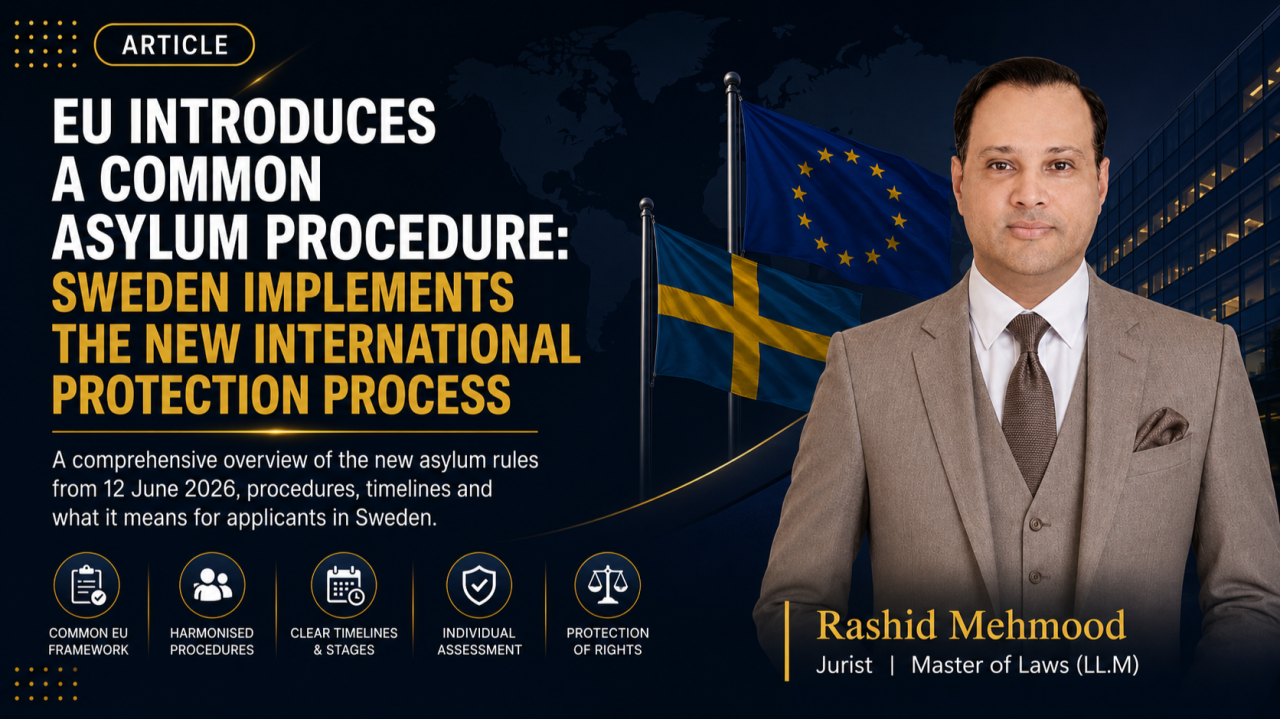
From 12 June 2026, the European Union has introduced a common regulatory framework governing applications for international protection, commonly referred to as asylum. The reforms form part of the EU Pact on Migration and Asylum, one of the most comprehensive overhauls of the EU’s migration system in recent years.
The objective of the new framework is to ensure that all EU Member States apply the same procedural standards when receiving, screening and examining asylum applications. While national authorities remain responsible for deciding individual cases, applicants across the European Union will now pass through a harmonised process designed to improve consistency, legal certainty and administrative efficiency.
As one of the EU Member States, Sweden has implemented these new rules through the Swedish Migration Agency, introducing several procedural changes that affect how applications for international protection are registered, examined and decided.
Sweden’s Implementation of the EU Framework
Sweden has incorporated the new EU asylum legislation into its national migration system through amendments to Swedish migration law and administrative procedures. The Swedish Migration Agency is responsible for applying the new rules while cooperating with other national authorities, including the Police Authority and the Swedish Prison and Probation Service.
The reforms are intended to create a more structured and predictable asylum process without changing the legal criteria for obtaining protection. Individuals who meet the requirements for refugee status or subsidiary protection under international and EU law will continue to receive protection. The principal changes concern the procedural stages, timeframes and examination methods that now apply throughout the European Union.
What Has Changed
Although the substantive grounds for international protection remain unchanged, the application process has become more standardised across the EU. Applicants will now move through clearly defined stages beginning with the expression of an intention to seek protection, followed by mandatory screening, registration of the application, allocation to the appropriate examination procedure and finally an individual decision on the merits of the claim. The new framework is intended to reduce procedural differences between Member States, strengthen border management and improve the efficiency of asylum decision-making while preserving each applicant’s right to an individual assessment.
Where an Application Can Be Made in Sweden
A person seeking international protection in Sweden may express their intention to apply for asylum to the police authority, the Swedish Prison and Probation Service or directly to the Swedish Migration Agency. Following the expression of intent, the Swedish Migration Agency is responsible for formally registering the application and conducting the asylum examination. Under the new rules, applications should normally be registered within five days, ensuring that applicants enter the asylum procedure without unnecessary delay.
Mandatory Screening Before Registration
One of the most significant innovations introduced by the EU Pact is the mandatory screening procedure that must take place before an asylum application is formally processed.
The screening applies to individuals who do not have permission to enter or remain within the European Union and consists of several important checks, including:
- verification of identity through documents, fingerprints and photographs;
- security checks against national and European databases;
- assessments of vulnerabilities or special reception needs; and
- health assessments where required.
The purpose of the screening is to establish the applicant’s identity, identify potential security concerns, detect vulnerable persons requiring additional support and determine the most appropriate procedure for examining the application. In Sweden, individuals undergoing screening may temporarily stay at designated reception and return centres operated by the Swedish Migration Agency before their application proceeds to the next stage.
Examination Procedures in Sweden
Once screening and registration have been completed, the Swedish Migration Agency determines which examination procedure applies to the application.
Regular Procedure
The regular procedure will continue to apply to the majority of asylum applicants. Under this procedure, the Swedish Migration Agency first determines whether Sweden is responsible for examining the application. If the application is admissible, the authority carries out a full assessment of the applicant’s need for international protection based on the facts of the individual case, supporting evidence and applicable law. The new framework provides that most applications processed under the regular procedure should normally be decided within six months.
Accelerated Procedure
Certain applications may instead be examined under an accelerated procedure. This procedure is intended for cases where an application appears unlikely to succeed, such as where the applicant originates from a country considered safe, has submitted false or misleading information, presents claims that are manifestly unfounded, or raises concerns relating to national security or public order. Because these cases require less extensive examination, they are generally expected to be concluded within three months, with shorter time limits for appeals.
Asylum Border Procedure
One of the most notable changes introduced in Sweden is the implementation of the Asylum Border Procedure, which has been established under the EU Pact for the first time. The procedure applies mainly to certain applicants arriving at the EU’s external borders whose applications are likely to be rejected or where security concerns exist. During this process, applicants may legally be regarded as not having entered the territory of the Member State while their claims are being examined.
The border procedure is intended to enable authorities to assess applications more efficiently while ensuring that every applicant continues to receive an individual examination of their protection claim. Under the new rules, the procedure should generally be completed within twelve weeks.
Subsequent Applications
The new legislation also introduces stricter rules for individuals who submit a further application for international protection after receiving a final decision in another EU member state. A subsequent application will generally only be examined if the applicant presents new facts or evidence that could not reasonably have been submitted earlier and that may significantly affect the assessment of the need for protection.
The objective is to discourage repeated applications based on previously examined circumstances while ensuring that genuinely new protection claims continue to receive proper consideration.
Replacement of the Dublin Regulation
Another major reform is the replacement of the Dublin Regulation with the Asylum and Migration Management Regulation (AMMR). While Member States will continue to determine which country is responsible for examining an asylum application, the new regulation introduces a stronger solidarity mechanism among EU countries.
Under the AMMR, Member States experiencing exceptional migratory pressure may receive assistance from other Member States through relocation of applicants, financial contributions or other operational support. This aims to distribute responsibility more fairly across the European Union while maintaining an orderly asylum system.
Practical Effect for Applicants in Sweden
For individuals seeking protection in Sweden, the new rules create a clearer and more structured asylum process. Applicants will move through identifiable procedural stages, beginning with the expression of an intention to seek protection, followed by mandatory screening, formal registration, allocation to the appropriate examination procedure, assessment by the Swedish Migration Agency and, where applicable, judicial review through the appeals process.
Although the procedures have become more standardised and timeframes have been introduced, every application must still receive an individual assessment based on the applicant’s personal circumstances and the applicable legal framework.
Conclusion
Sweden’s implementation of the EU’s new international protection framework represents an important step towards a more harmonised European asylum system. By introducing common screening procedures, standardised examination methods and coordinated rules across Member States, the reforms seek to improve efficiency, strengthen legal certainty and ensure more consistent treatment of asylum applications throughout the European Union. At the same time, the reforms reaffirm that every person seeking international protection has the right to an individual assessment of their claim, ensuring that the principles of refugee protection under international and European law remain fully respected.
Further Information
The Swedish Migration Agency has published a detailed explanation of the new procedures on its official website.
Disclaimer: This article provides general legal information only. It is not legal advice. Every immigration case is different, and the outcome depends on the individual facts, evidence and the law applicable at the time the decision is made.
