 Stadiongatan 65, 217 62 Malmö
 0737369660
 info@iraconsulting.se


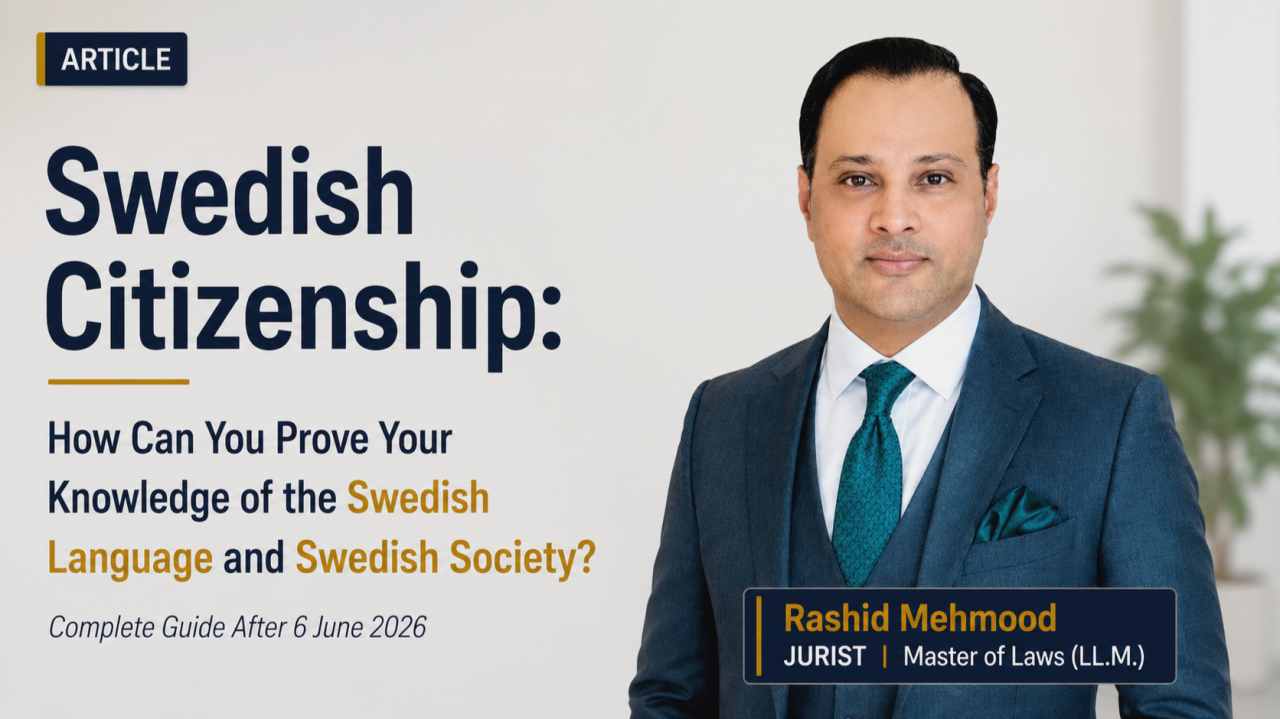

One of the most common questions about Sweden’s new citizenship rules is the following:
“Do I have to take a Swedish language test and a Swedish society test to become a Swedish citizen?”
The short answer is no, not for everyone. However, the full answer is more nuanced.
The law requires applicants to prove their knowledge of the Swedish language and Swedish society, but not everyone will need to take the official citizenship tests. Many applicants already satisfy the legal requirements through recognised education or approved qualifications. Others may need to take a citizenship test only if they cannot demonstrate their knowledge in another accepted way.
Understanding the difference can save applicants time, avoid unnecessary concern, and help them prepare the correct documents before submitting a citizenship application.
Key Takeaways
- Most applicants aged 16 to 66 must prove knowledge of the Swedish language and Swedish society.
- Not everyone needs to take the official citizenship tests.
- Existing educational qualifications may already satisfy the legal requirements.
- Applicants without recognised qualifications may be referred to citizenship tests by Migrationsverket.
- The Swedish society test begins in August 2026, while the official Swedish language test is expected no earlier than autumn 2027.
Why Were These Requirements Introduced?
On 6 June 2026, Sweden introduced stricter citizenship rules. One of the most significant changes is that most applicants between 16 and 66 years of age must demonstrate sufficient knowledge of both the Swedish language and Swedish society.
According to the Swedish Parliament, the purpose of these reforms is to strengthen the value of Swedish citizenship and ensure that new citizens have the language skills and civic knowledge needed to participate actively in Swedish society. The reform reflects the view that citizenship represents not only a legal status but also participation in Sweden’s democratic and social life.
Who Must Meet the Requirements?
The knowledge requirements generally apply to applicants aged 16 to 66.
However, some applicants are exempt, including:
- Stateless persons born in Sweden who are under 21 years of age.
- Nordic citizens acquiring Swedish citizenship through notification.
- Applicants who cannot meet the requirements because of a disability or other recognised circumstances.
Whether an exemption applies is assessed individually by Migrationsverket.
Do You Have to Take a Citizenship Test?
The short answer is no, not for everyone.
This is probably the biggest misunderstanding surrounding the new rules. The law requires applicants to prove their knowledge. It does not require everyone to take the official citizenship tests. If you already have recognised educational qualifications, they may satisfy the requirements without any additional examination.
The official citizenship tests are mainly intended for applicants who cannot prove their knowledge through recognised education or other accepted evidence.
“Proving your knowledge is the legal requirement. Taking the official citizenship tests is only one of several accepted ways to do so.”
Before assuming that you must take a citizenship test, it is worth reviewing your educational history. Many applicants already possess the evidence they need.
How Can You Prove Your Knowledge of the Swedish Language?
Migrationsverket recognises several ways to demonstrate the required language knowledge. Many applicants who have already studied in Sweden may discover that they satisfy the requirement without taking a separate citizenship examination.
You may already meet the language requirement if you have an approved qualification from the following:
- Compulsory school (Grundskolan).
- Upper secondary school (Gymnasieskolan).
- Municipal Adult Education (Komvux).
- The highest approved course in Swedish for Immigrants (SFI).
- Swedish studies completed in another Nordic country.
Language knowledge may also be demonstrated through:
- Tisus (Test in Swedish for University Studies).
- Another recognised examination that reliably demonstrates functional Swedish-language skills. During the current transitional period, Swedex is one example specifically referred to by Migrationsverket.
What Level of Swedish Is Required?
The required language level follows the Common European Framework of Reference for Languages (CEFR/GERS).
Applicants should demonstrate:
- Reading: B1
- Listening: B1
- Speaking: A2
- Writing: A2
These levels are intended to demonstrate functional language skills that enable applicants to communicate effectively and participate in everyday life in Sweden.
How Can You Prove Your Knowledge of Swedish Society?
Knowledge of Swedish society is a separate legal requirement from knowledge of the Swedish language. Applicants may satisfy this requirement through approved grades in civics or equivalent social studies subjects from recognised education, including the following:
- Compulsory school (Grundskolan).
- Upper secondary school (Gymnasieskolan).
- Folk High School (Folkhögskola).
- Municipal Adult Education (Komvux).
If you already hold one of these recognised qualifications, you will normally not need to take the citizenship test concerning Swedish society. As with the language requirement, it is important to review your previous studies before assuming that an additional examination is necessary.
What If You Do Not Have the Required Qualifications?
Applicants who cannot prove their knowledge through recognised education may need to complete the official citizenship tests. These tests provide an alternative route for applicants who have not studied within the Swedish education system or who do not hold recognised qualifications that satisfy the legal requirements.
Citizenship Test on Swedish Society
The citizenship test covering knowledge of Swedish society will be available from August 2026.
According to the Swedish Council for Higher Education (UHR), the examination:
- Consists of approximately 60 multiple-choice questions.
- Is conducted in Swedish.
- Has a testing time of approximately 90 minutes.
The test is designed to assess an applicant’s understanding of Swedish society, democratic values, rights and responsibilities, and other essential civic knowledge expected of future Swedish citizens.
Citizenship Test in Swedish
The official citizenship test in Swedish will be introduced no earlier than autumn 2027. Until the official Swedish-language citizenship test becomes available, applicants who do not have recognised educational qualifications are not left without options.
They may still demonstrate the required language knowledge through Tisus or another recognised examination, such as Swedex, provided the examination demonstrates the required functional language level accepted by Migrationsverket.
Who Is Responsible for the Citizenship Tests?
Several authorities are involved in the process.
Migrationsverket assesses whether an applicant already satisfies the knowledge requirements or whether a citizenship test is required. If a test is necessary, Migrationsverket will notify the applicant and provide information on the next steps.
The Swedish Council for Higher Education (UHR) administers the citizenship test concerning Swedish society and provides official preparation material.
The official Swedish-language citizenship test is being developed by Stockholm University following a Government assignment.
Can You Register for the Citizenship Test Yourself?
No, Applicants cannot simply book the official citizenship tests whenever they wish.
The process normally works as follows:
- The applicant submits a citizenship application to Migrationsverket.
- Migrationsverket assesses whether the applicant already satisfies the knowledge requirements through recognised qualifications or other accepted evidence.
- If the knowledge requirements have not been met in another recognised way, Migrationsverket informs the applicant that a citizenship test is required.
- The applicant then registers for the relevant test according to the instructions provided.
In other words, the citizenship tests form part of the citizenship application process rather than being examinations that applicants can independently book in advance.
Practical Examples
Example 1 – Highest SFI Course Completed
A person has completed the highest approved SFI course and later studied Swedish through Komvux. They may already satisfy the Swedish-language requirement without taking the official Swedish-language citizenship test.
However, they must still separately demonstrate knowledge of Swedish society.
Example 2 – Swedish School Education
A person completed compulsory school in Sweden and received approved grades in both Swedish and civics.
Those qualifications may already satisfy both the Swedish-language requirement and the Swedish-society requirement.
Example 3 – Tisus Qualification
A person completed all of their education outside Sweden but passed Tisus. The Tisus result may satisfy the Swedish-language requirement.
However, the applicant must still separately prove knowledge of Swedish society through recognised education or, where applicable, the citizenship test.
Example 4 – No Recognised Qualifications
A person has not studied Swedish through a recognised educational pathway and does not hold any accepted qualifications.
If they cannot demonstrate the required knowledge through another recognised examination, Migrationsverket may invite them to take the official citizenship tests.
Common Misunderstandings
Several misunderstandings have emerged since the new rules entered into force.
“Everyone must take both citizenship tests.”
Incorrect. Many applicants already satisfy one or both knowledge requirements through recognised educational qualifications.
“Any SFI course is enough.”
Incorrect. The rules refer to an approved grade in the highest relevant SFI course.
“Language knowledge automatically proves knowledge of Swedish society.”
Incorrect. Knowledge of the Swedish language and knowledge of Swedish society are two separate legal requirements and are assessed independently.
“I can register for the citizenship tests whenever I want.”
Incorrect. Registration follows an assessment by Migrationsverket. If a test is required, applicants receive instructions on how to register.
Practical Advice Before Applying
Before submitting a citizenship application, take some time to review your educational history and supporting documents. You may already possess the evidence needed to satisfy one or both knowledge requirements.
Ask yourself the following questions:
- Do I already have approved grades in Swedish?
- Have I completed the highest approved SFI course?
- Have I studied Swedish or civics through Komvux?
- Do I have recognised qualifications from compulsory or upper secondary school?
- Have I passed Tisus or another recognised language examination, such as Swedex?
- Do I qualify for an exemption because of a disability or other recognised circumstances?
Collecting your educational certificates, transcripts and other relevant documentation before applying can help make the application process smoother and reduce the likelihood of unnecessary delays.
“Before preparing for a citizenship test, check whether your existing qualifications already satisfy the legal requirements.”
Spending a few minutes reviewing your educational history today could save months of uncertainty during your citizenship application.
Final Thoughts
The introduction of knowledge requirements is one of the most significant reforms to Swedish citizenship law in recent years.
However, the most important message is this: Sweden’s new citizenship rules require applicants to prove their knowledge of the Swedish language and Swedish society. They do not automatically require every applicant to take the official citizenship tests.
For many applicants, recognised studies completed in Sweden—including compulsory school, upper secondary school, Komvux, the highest approved SFI course, Tisus or other accepted qualifications—may already satisfy one or both legal requirements.
Only applicants who cannot demonstrate their knowledge through another recognised method may need to complete the official citizenship tests.
Before assuming that an examination is necessary, carefully review your educational background and qualifications. You may already possess everything needed to satisfy the legal requirements.
Official References
This article is based on the following official sources:
- Swedish Migration Agency, Citizenship for Adults (Medborgarskap för vuxna).
- Government Bill 2025/26:175 – Skärpta krav för svenskt medborgarskap.
- Social Insurance Committee Report 2025/26:SfU28.
- Decision of the Swedish Parliament dated 29 April 2026.
- Swedish Council for Higher Education (UHR), information on the Citizenship Tests (Medborgarskapsprovet).
- Government Offices of Sweden, information regarding the development of the Swedish-language citizenship test.
Disclaimer: This article provides general legal information only. It is not legal advice. Every immigration case is different, and the outcome depends on the individual facts, evidence and the law applicable at the time the decision is made.
